

Every career begins with a decision about what to study—a choice that can seem permanent. But does education always map directly to occupation, or are most journeys defined by unexpected pivots?
Building on this foundation, recent Statistics Canada data tracks how British Columbians (aged 25–64) progress from their chosen field of study into their current jobs. The research, covering those with post-secondary credentials earned in or outside Canada, offers insights about these transitions.
The Education – Occupation Alignment
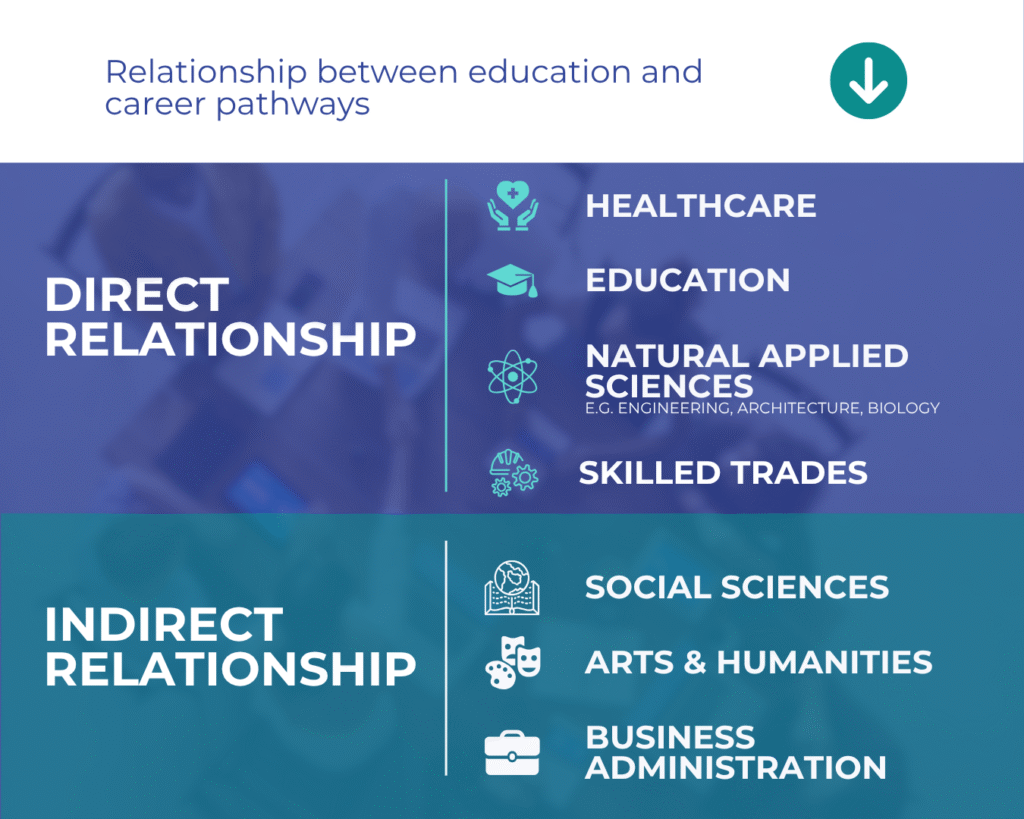
Certain programs, such as health care, education, engineering, and skilled trades, lead directly to related jobs. Structured credential requirements make these roles both accessible and highly competitive.
In comparison, generalist fields such as business, administration, arts, humanities, and social sciences lead to diverse job outcomes and offer considerable adaptability.
Education Completed Outside Canada: A Different Pattern
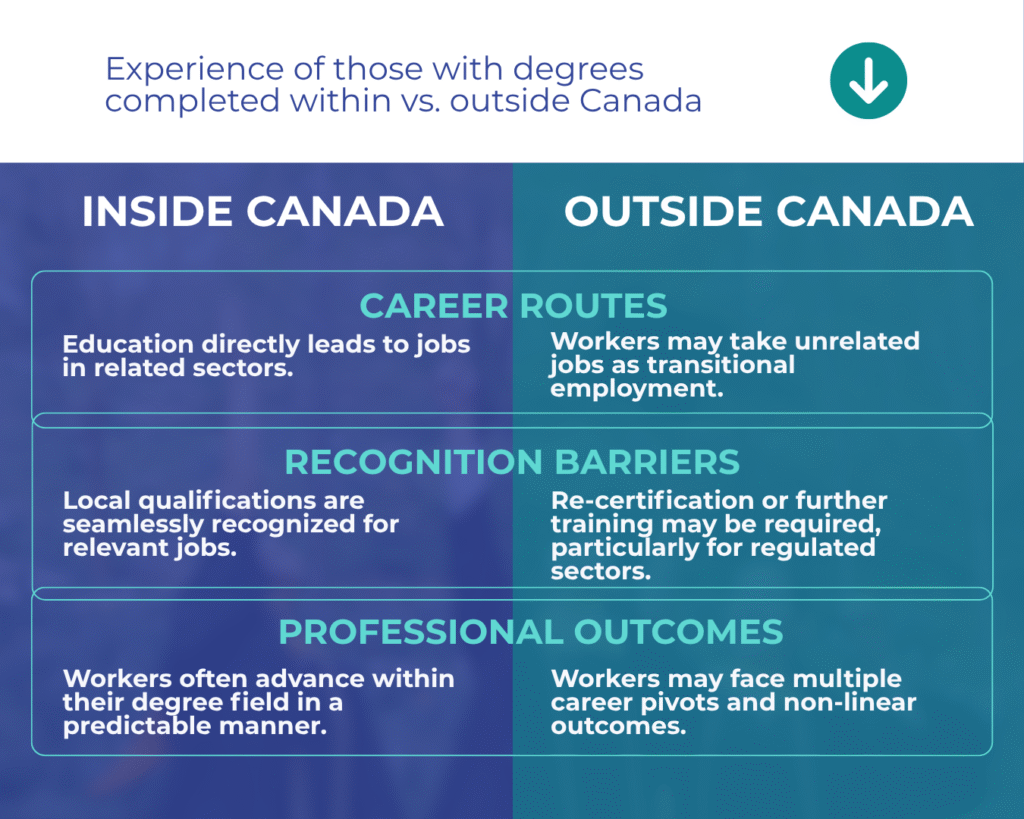
For those educated outside Canada, especially in regulated fields.
- A smaller portion of internationally degree holders continue in their original fields. For example, 86% of international graduates cite this as a significant challenge, compared to 56% of domestic students.
- Business serves as a broad destination, welcoming diverse talent, apart from finance and accounting.
- For regulated professions such as STEM fields or healthcare, foreign credentials are not widely accepted, leading to barriers in credential recognition and relevant employments.
- Many international degree holders tend to reinvent themselves or take more transitional jobs on their career path and may take longer to progress in their careers compared to peers with Canadian degrees.
Recommendations for Career Adaptability
Professionals transitioning from regulated fields can benefit from broadening their credentials through options like micro-credentials, applied certificates, MBAs, or management and communication training. These programs build transferable skills that create access to hybrid specialist–management roles across a range of sectors.
Generalist qualifications also offer wide career mobility. Their value lies in communication, problem-solving, and leadership skills that remain relevant as industries evolve. Because generalist pathways attract many candidates, individuals can differentiate themselves by developing a niche, targeting sectors with clear skill needs, or positioning themselves within emerging areas such as business communications, research coordination, or administrative roles in technical and design-focused firms.
Resources for Career Growth and Credential Recognition
Regardless of profession, staying competitive means ongoing education and using community resources. Key supports include:
- WorkBC Employment Services – Offers free career planning, job search support, training, and employment workshops for B.C. residents.
- StrongerBC Future Skills Grant – Covers up to $3,500 for short-term skills training at public institutions.
- START Program by Worklink – Prepares youth aged 15-30 for work through training, coaching, job placement, and wage subsidies.
- Alumni Career Services – Free career advising, job tools, and professional resources for alumni, such as at University of Victoria, Royal Roads University and Camosun College.
For specialized support if you are skilled immigrants, some options include:
- WelcomeBC’s Working in B.C. – Guides newcomers through licensing steps, credential recognition, and regulated occupation requirements.
- Pathways to Professions, Trades, and Entrepreneurship (P2PTE) – Run by Victoria Immigrant and Refugee Centre Society (VIRCS), it provides newcomer job support and community integration services such as Pathways to Professions, Trades, and Entrepreneurship (P2PTE).
- Career Paths for Skilled Immigrants Program – Hosted by Inter-Cultural Association (ICA) Victoria, the program helps internationally trained professionals pursue careers aligned with previous qualifications.
- PICS Foreign Credential Recognition Program (FCR) – Supports internationally trained professionals with credentialing costs, loans, guidance, and coaching.